Coding is solved. Engineering isn’t (blog). I agree. Once we decide to build something, we build it really fast. Engineers who stood out as coding machines just don’t stand out any more; everyone’s a coding machine now. Some of the designers here at Bonusly are out outputting engineers. It’s crazy to watch.
The industry collectively reacted to AI by deciding that everyone’s a builder. Get the PMs coding. Get the designers in Cursor. Make the whole org ship. I think this is wrong. Or at least, it's wrong right now. AI hasn't eliminated the need for people who are great at deciding what to build next. It’s made that skill more valuable, more urgent, and more scarce.
Who are we now?
I observe fellow software engineers lamenting the loss of our identity as craftspeople. What are we if we’re not coding anymore? Do we still have a career? I think we do. And it’s going to involve AI now. What we need to do is adapt and learn to really crank with this stuff. Scott Walker (who also works here at Bonusly) dives deep into the topic here. Give it a read.
Builders here at Bonusly do embrace AI, and it has dramatically shortened build cycles. It has also unearthed a new bottleneck.
The new bottleneck
Before AI, we had plenty of time to think about what to do next.
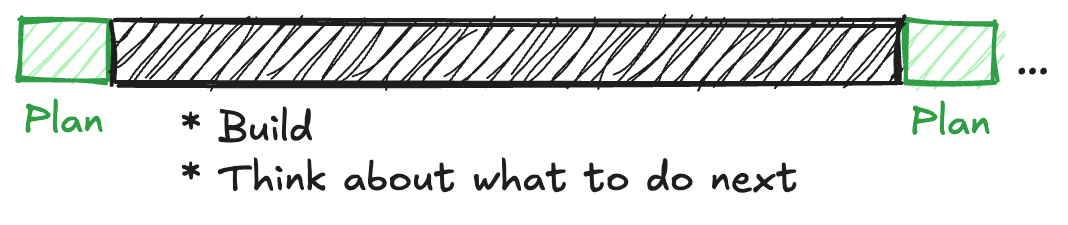
With AI, we have a lot less time to think about what’s next:
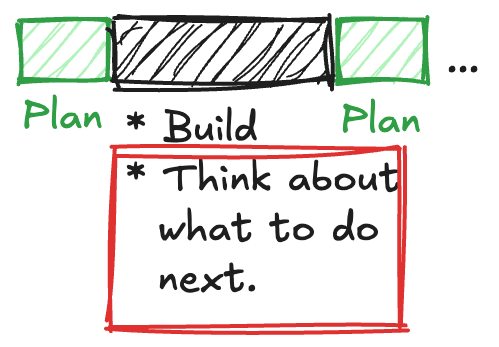
Thinking about what to do next is our bottleneck. (And I accordingly put a bright, red square around it to reinforce the point.) The builders finish building much faster than they used to, which means the planners need to plan faster so we can keep the builders building.
What if the planners were also the builders? What if PMs and designers could code like engineers, and engineers could plan like PMs and designers? If planners were builders, they’d auto-resolve the plan-build bottleneck. I’m done building. Now I’ll plan. I’m done planning, now I’ll build.
Magic.
Indeed, AI is making it easier for PMs and designers to build. We see designers here planning in Figma, using their planning skills to get alignment on the plan, then building their own design with Cursor and Figma MCP.
But it’s not making it easier for engineers to plan. Planning is a skill the coding machine never had to develop.
I find myself re-reading Drew Hoskins post about engineering archetypes every few months as I find the seven archetypes he defines helpful in explaining why we see divergence in how engineers realize impact as they get more senior. Of the seven, I think the Product Hybrid is relishing the advent of AI, as they were effectively PMs who can code like staff engineers anyway. They can already plan and build. This is their renaissance.
In my experience, the Product Hybrid is the rarest of the archetypes. And I believe that most of us who run engineering teams know this. We also know engineers are smart and must contend with the new AI world we live in. We know that most engineers will, over the next few years, learn how to be good planners. And when that happens, when most engineers are Product Hybrids, they’ll be unstoppable.
But this is not how it is now. Now the builders build quickly, and the planners also build; we need more people thinking about what to do next. The bottleneck persists.
Should everyone be a builder?
As I see it, the solution is to rethink this whole “everyone’s a builder” thing we’ve pushed onto ourselves. The pragmatic thing to do is to survey the organization. Who has taste? Who’s a good problem finder? Who can articulate the future and create alignment? These are people who are already good at planning. And they tend to be PMs and designers.
I think planners should go back to spending most of their time planning. When builders are done building, the next plan is already ready, and they go back to building. While we’re in the period between periods, and engineers adjust their craft, we accept the coordination cost; that most planners aren’t also builders and most builders aren’t also planners, and the two parties will have to talk and hand off work.
Companies who do this now (while engineers figure out how to be planners) will, I think, outpace the companies that don’t.
My $0.02,
JT
Post script
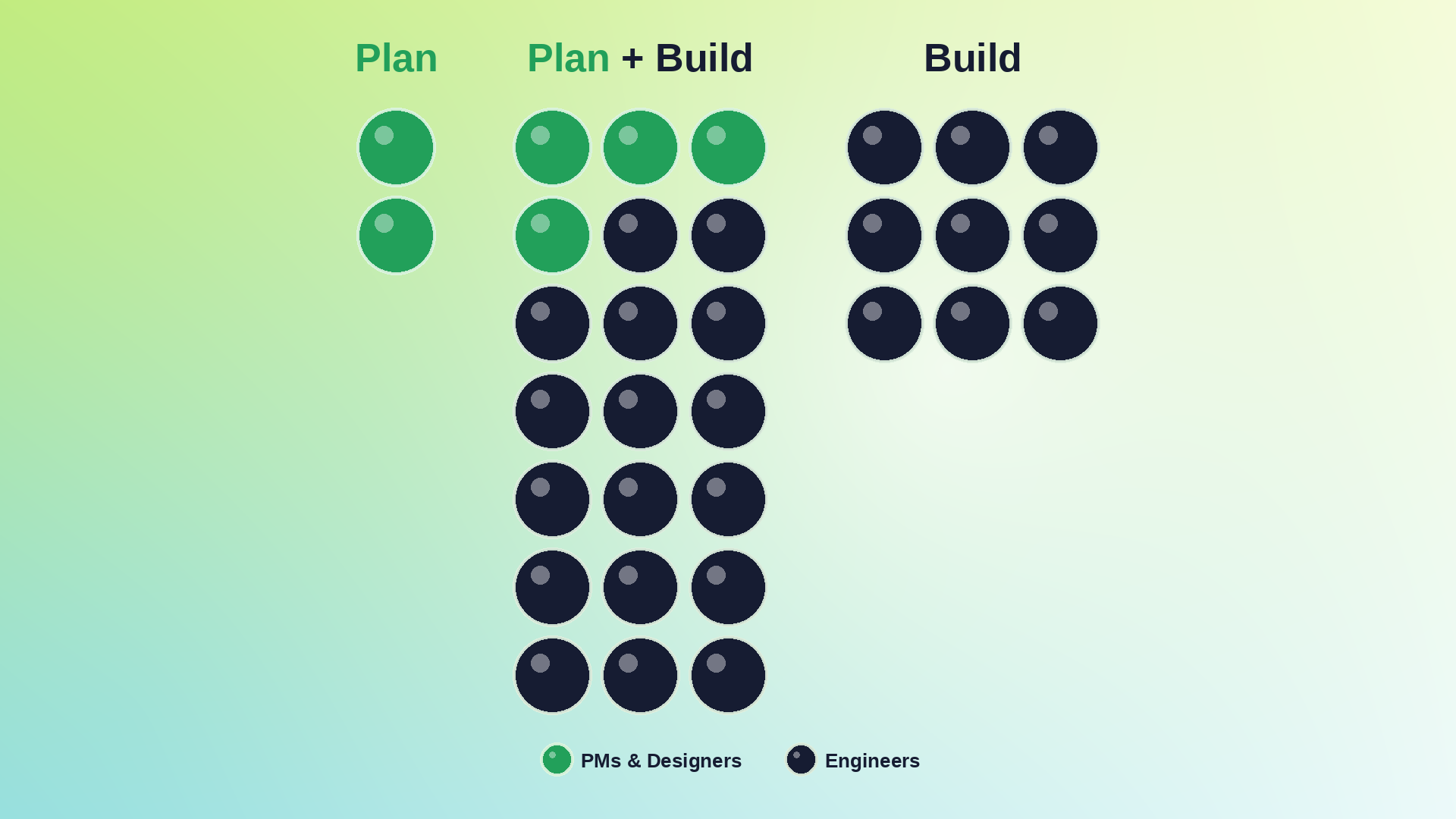
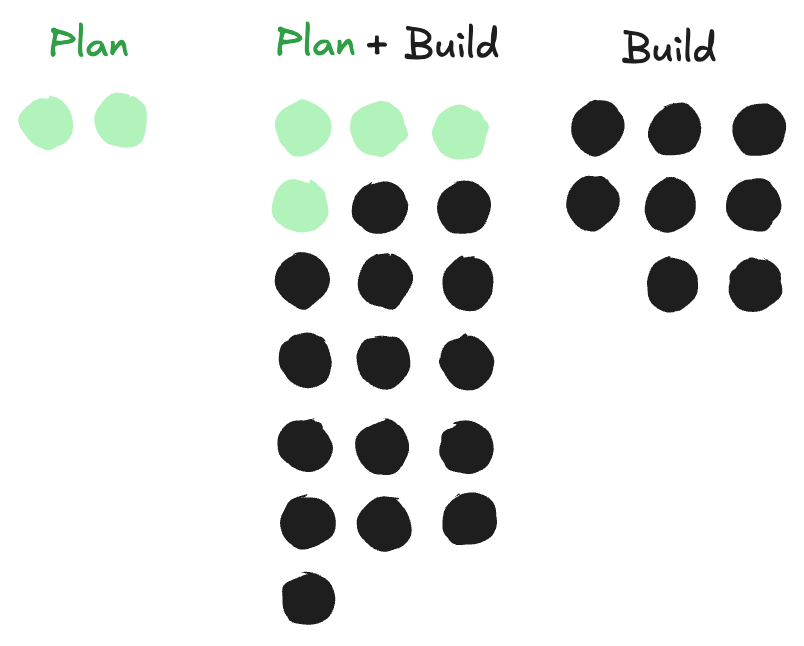
Today, Bonusly’s Product Org spreads across planning and building roughly as follows (green circles are PMs and designers. Black circles are engineers):
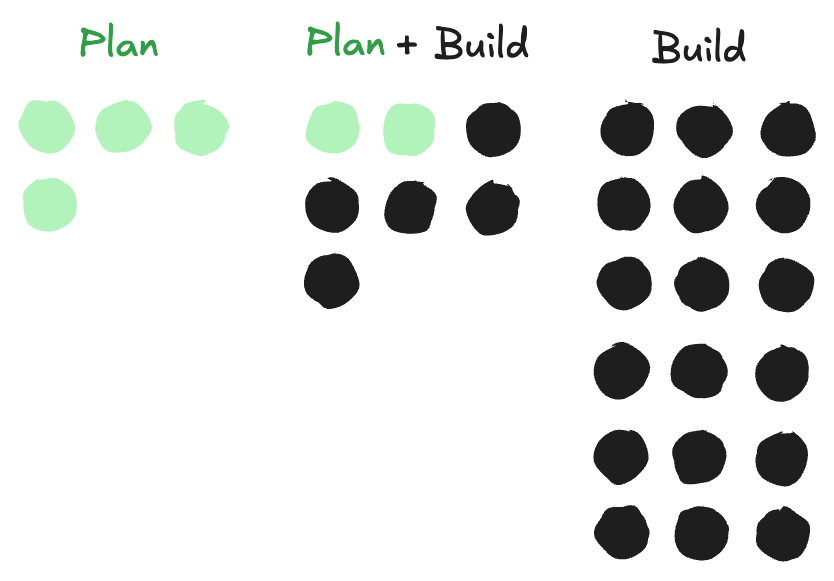
Some planners only plan. Others plan and build (designers who can code). And some builders also plan (EMs, technical project leads). It’s not binary, contrary to how I made it seem in the article. But the majority of builders (engineers) depends on planners to sort out priorities and decide and define what to do next.
Cool.
I think AI will push more builders to also become planners, and some planners to also start building. I think this will take years.
But I don’t think we’ll ever see a scenario where everyone both plans and builds. And this is ok. What’s more interesting is not that individuals can plan and build, but that teams can. Org design becomes salient here as we should build teams with mixed skillsets so that each team has all skillsets.