


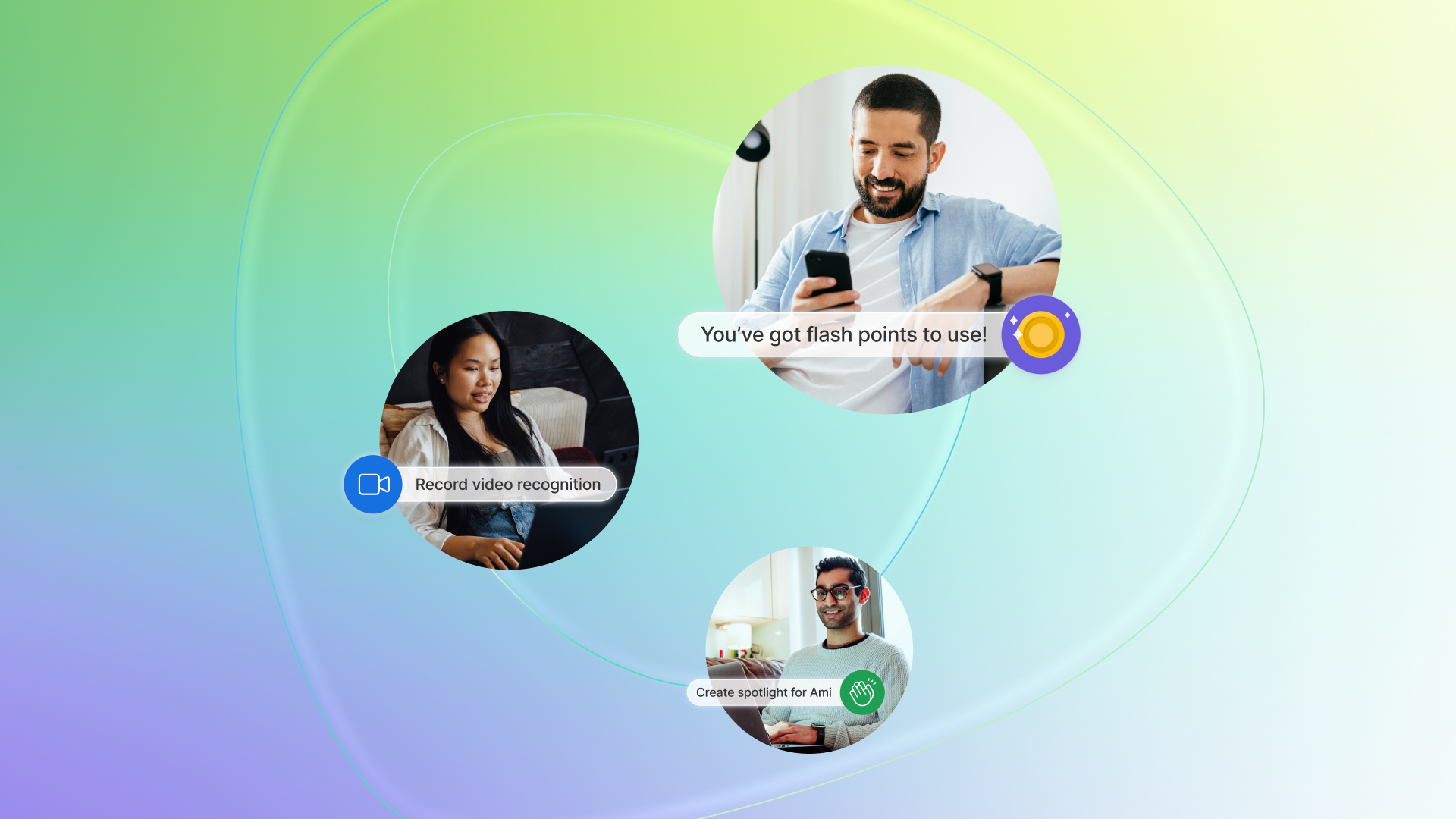
Recognition that's vague, infrequent, or top-down doesn't do much.
Employees can tell the difference between appreciation that's genuine and appreciation that's going through the motions—and so can your engagement data. Employee Appreciation Day is one of the few moments in the year when the whole organization is primed to participate at once.
What you do with that window matters more than the fact that you showed up for it.
- Some teams need momentum; meaningful recognition needs to feel like something that actually happens throughout their workweek.
- Others have participation but lack depth; people are sharing recognition, but the messages are generic enough that they don't mean much.
- And some organizations are ready to use the day as a genuine culture moment, one that models the kind of recognition they want to sustain all year.
Each of those starting points calls for a different approach, and with Bonusly, we can help make each one come to life. Let’s break those down now.
If your goal is momentum: make recognition visible
For a lot of organizations, the hardest part of building a recognition culture is getting those first few people to participate publicly, which therein gives everyone else permission to do the same.
Employee Appreciation Day removes that friction. You might:
- Send an Announcement through Bonusly that names the day, explains what participation looks like, and sets a clear expectation; recognition stops being an optional extra and becomes something the company is doing together.
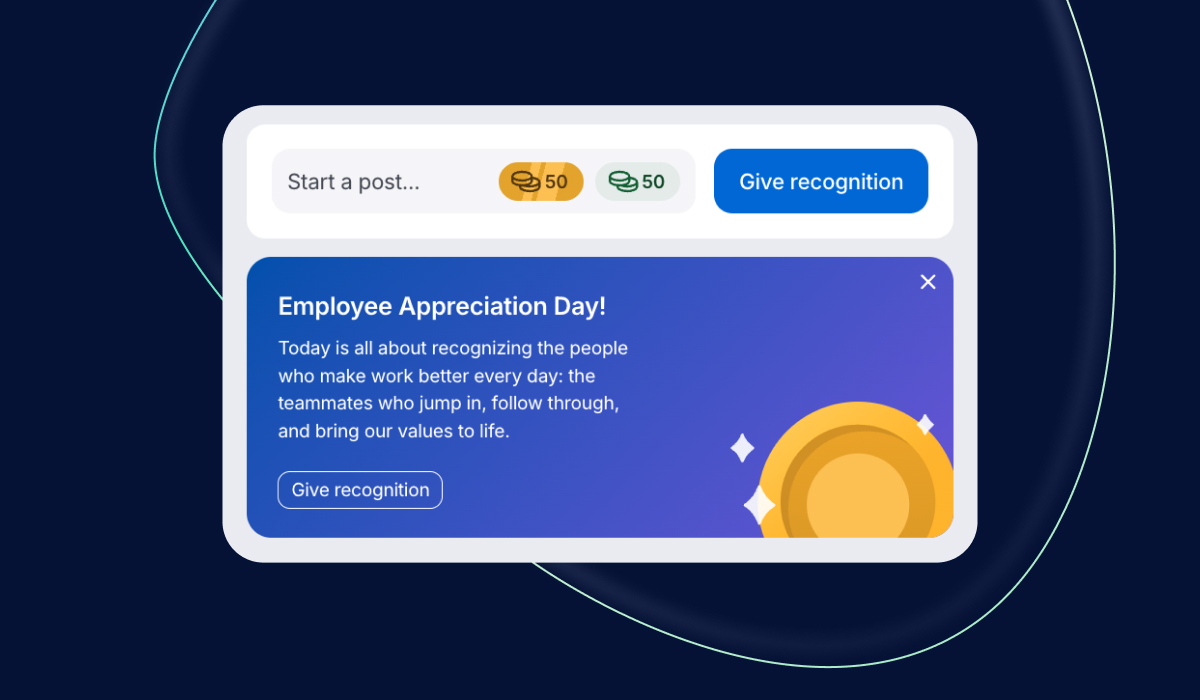
- Offer flash points on March 6th to give people a tangible reason to act that day rather than meaning to get around to it.
- Set up a Custom Celebration that automatically recognizes every employee, so no one reaches the end of the day feeling invisible. The employees least likely to be recognized organically are often the ones who most need to feel seen.
- Create a campaign hashtag to make participation visible in aggregate. When people can see the feed filling up in real time, it reinforces that the whole organization is doing this together.
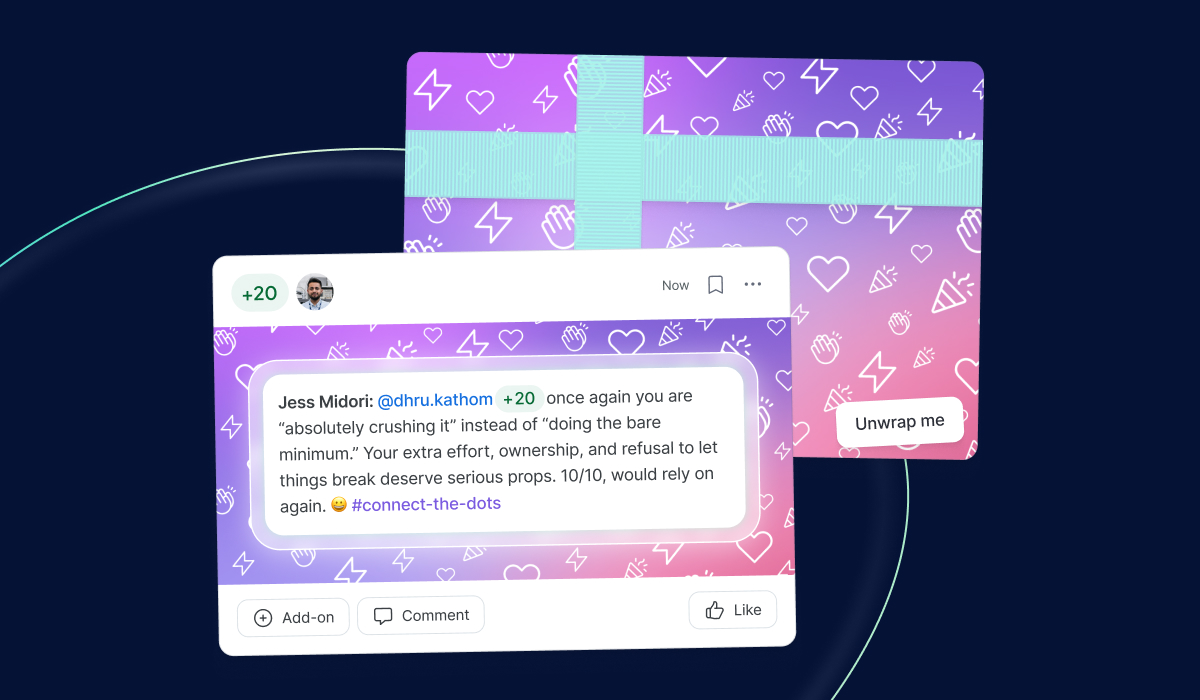
- Use Post Wrap (free for everyone on March 6th) to give individual recognition posts a visual layer that makes them feel like a fun celebration.
If your goal is depth: elevate the quality of recognition
Participation is a floor, not a ceiling. Once people are in the habit of recognizing each other, the next problem is usually specificity. "Thanks for everything you do, Jordan!" is better than nothing, but it doesn't tell Jordan what behavior to repeat, it doesn't signal to anyone else what great work looks like, and it certainly doesn't give HR leaders anything meaningful to learn from.
Instead, you might:
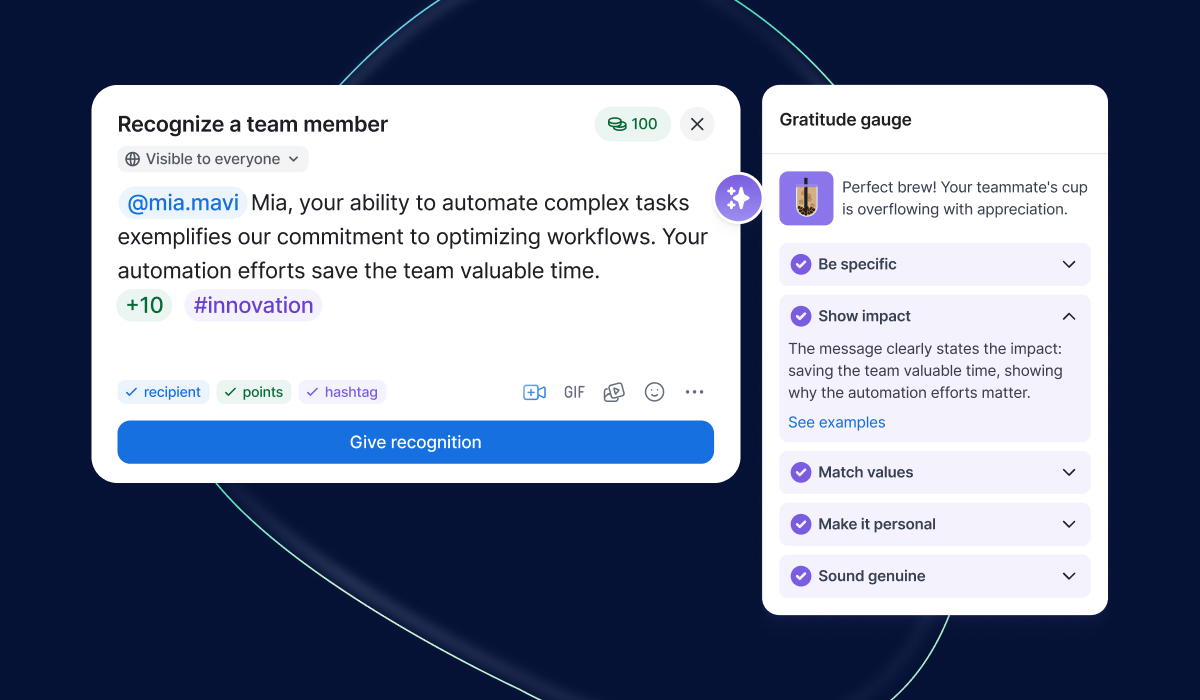
- Use the Gratitude Gauge to prompt people to name what someone did, why it mattered, and how it connects to a team goal or company value. The difference in the resulting message is significant: "Thanks for everything" becomes "Jordan rewrote the onboarding flow after our last three new hires told her the original version was confusing, and 90-day retention has improved since." That's a data point.
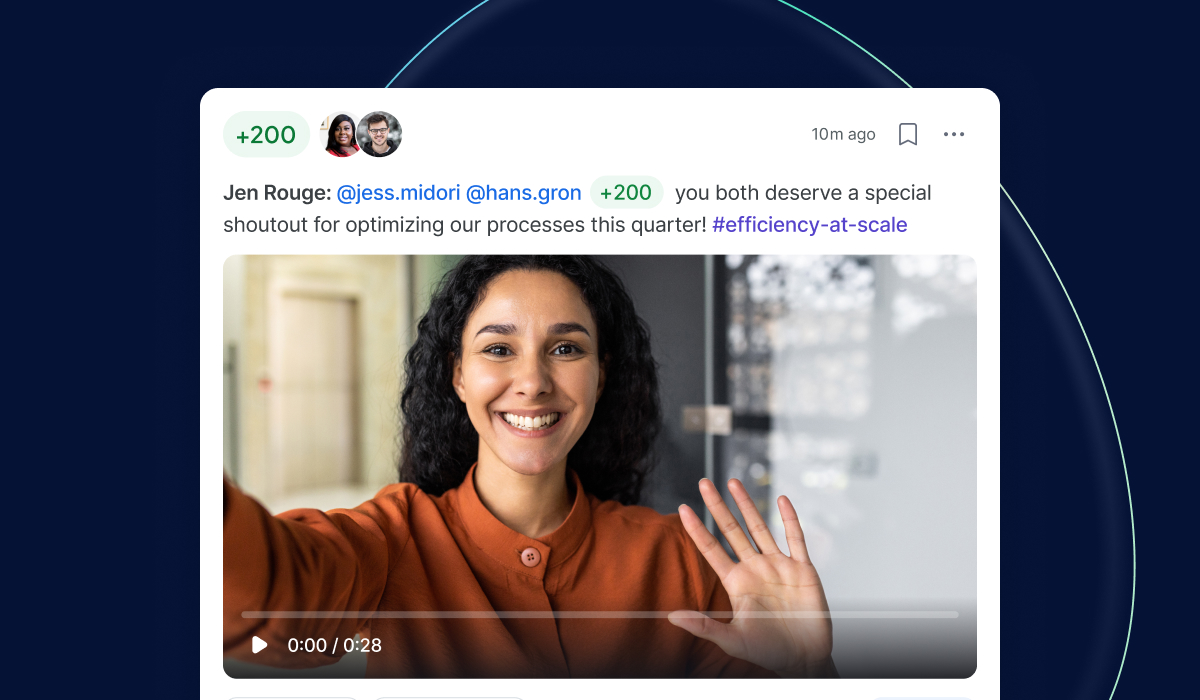
- Promote video recognition for moments that deserve more than text. A sixty-second message from a manager explaining what a team member did during a difficult product launch carries weight that a written post doesn't.
- Surface standout recognition in the places people already gather: a Slack channel, a Teams message, a moment in the all-hands where a real example gets read out loud. When leaders do this consistently, they're teaching the organization what quality recognition looks like and, by extension, what quality work looks like.
If your goal is a culture moment: turn appreciation into a shared story
Some organizations are ready to use Employee Appreciation Day as a deliberate expression of what their culture is and where they want it to go. You might:
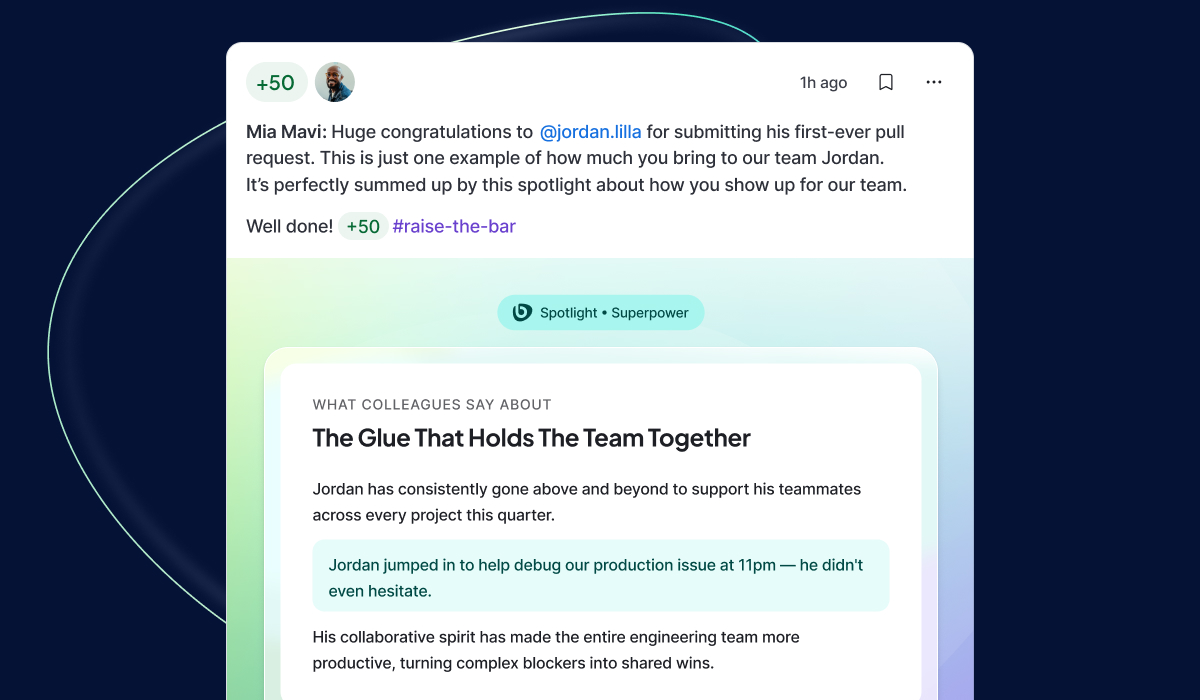
- Ask managers to generate Spotlights for each of their direct reports: a fun, story-driven description of what that person contributed over the past year, what made their work distinctive, and what the team would have looked like without them.
- Create department-specific awards that name the behaviors that matter most in each department, so that an award in engineering means something specific and different from one in customer success.
- Use Nominations so that peers (not just managers) can surface the people whose contributions tend to go unnoticed: the connectors, the ones doing glue work, the people who make everyone else better but rarely end up at the center of a visible win.
- Pair recognition with real-world celebration: a team lunch, a surprise half-day, a virtual gathering with an actual agenda help make the day feel like an event worth remembering/
With this approach, Employee Appreciation Day gives managers a clear picture of what recognition is supposed to look like, provides employees a shared reference point for what the company values, and generates stories that HR leaders can draw on for months.
Don't skip the debrief
Most organizations move on after March 6th. That's where a lot of the value gets left on the table.
Employee Appreciation Day generates a snapshot of your culture that you can actually read. After the day, you might:
- Review Participation Reports to see who engaged and which teams, departments, or managers didn't. Low participation is important information; something is getting in the way, and it's worth finding out what.
- Check Recognition Scores to assess quality. Were people specific? Did they connect behavior to values? A high volume of generic posts tells a different story than a smaller number of detailed, specific ones.
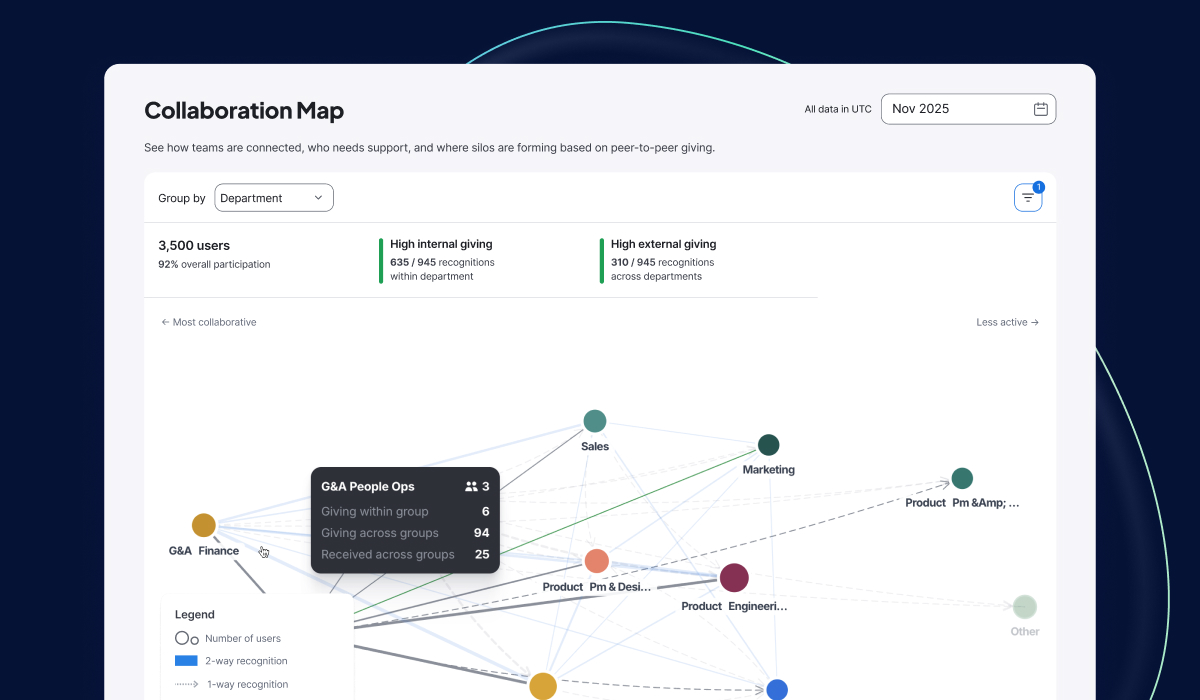
- Explore your Collaboration Map to see how recognition flows across the organization—which teams are connected to the rest of the company and which ones are more isolated than the org chart suggests.
- Use what you find to shape manager coaching, future people programs, and recognition best practices for the rest of the year.
Over time, this is how recognition becomes organizational insight. You're building a clearer picture of how your culture actually functions, and where the gaps are between the culture you say you have and the one people are living every day.
Start where it makes sense
You don't need to do all of this at once. A focused activation on March 6th (start with one approach, executed well) is more valuable than an elaborate campaign that produces recognition that feels thin.
Pick the goal that fits your organization right now. If you need participation, build visibility. If you have participation but lack depth, invest in quality. If you're ready to make the day mean something bigger, design it as a culture moment. And when it's over, spend some time looking at what it left behind. The patterns you find there are the ones worth building on.
Not a Bonusly customer but ready to get started? Get Bonusly for free, or reach out to our experts to learn how it can scale your company culture.

%2520(1).webp)


